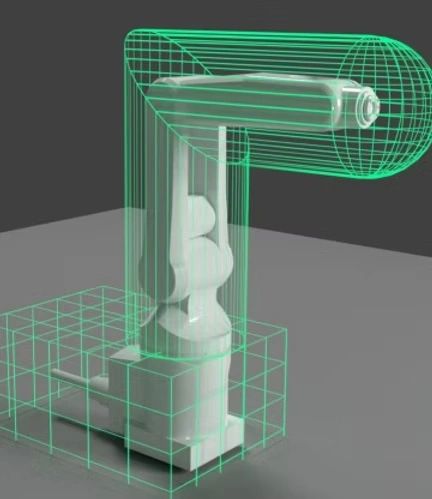
3D Fenceless Safety System
Most safeguards were built for static layouts. Your operations are not static. Sensory Robotics delivers 3D virtual safeguarding that protects people in dynamic environments while supporting throughput, access, and changeover.
If your process depends on frequent changeovers, mixed traffic, AMRs, or shared human-robot work, physical fencing and fixed zones often force a tradeoff between safety and productivity. Our approach replaces rigid boundaries with configurable, validated virtual safety behavior aligned to your real operating states.
COMPLIANCE: WHAT FENCELESS ROBOT SAFETY MUST MEET
Fenceless robot safety is not a regulatory gray area. The standards framework is specific, auditable, and well-established. Complies with:
- ISO 10218-1 and ISO 10218-2 — The primary international standards for industrial robot safety. Part 1 covers the robot itself; Part 2 covers the integration of robots into a work system. Fenceless deployments fall under Part 2 requirements for shared workspace operations.
- ANSI/RIA R15.06-2012 — The US national standard for industrial robot safety, adopted from ISO 10218. Compliance with R15.06 is the baseline expectation for OSHA-auditable robot installations in US manufacturing facilities.
- ISO 13849-1 — The standard governing the performance level (PL) of safety functions. The SR-1's safety-rated stop function is certified to PLd Category 3, meaning it carries a defined reliability requirement and uses redundant architecture to prevent single-point failures.
- ISO/TS 15066 — The technical specification for collaborative robot operations, which defines the specific safety functions — including Speed and Separation Monitoring — that fenceless systems implement.
From a liability standpoint, compliance with these standards matters in both directions. OSHA 29 CFR 1910.217 and the General Duty Clause create employer obligations around machine guarding and worker safety — and in litigation following a workplace robotics incident, alignment with recognized standards is a primary defense. Non-standards-aligned deployments create exposure.
WHERE FENCELESS ROBOT SAFETY IS USED
The SR-1 is deployed across a range of industrial environments where shared human-robot operation is a daily reality, not an occasional exception.
- Automotive and Tier 1 manufacturing: Assembly cells with frequent worker access for parts presentation, quality inspection, and tool changeovers. Fenceless safety eliminates the guarded perimeters that create bottlenecks in high-volume, low-changeover-time environments.
- Aerospace and precision manufacturing: Applications where multiple robots operate in close proximity to skilled workers performing detailed tasks. SSM allows the robot to continue operating at a reduced speed when a worker is nearby, rather than stopping entirely.
- Warehousing and logistics: Mixed-traffic environments where AMRs, floor workers, and fixed automation share the same floor. The SR-1 supports multi-robot coordination with shared safety state awareness — a capability that 2D area scanners and physical guarding cannot provide.
- General manufacturing with frequent changeovers: Any facility where cell layouts change regularly. Fenceless systems reconfigure faster than physical guarding, and the SR-1's zone configuration is adjustable without a full recommissioning cycle.
WHY MANUFACTURERS ARE MOVING AWAY FROM ROBOT FENCING
Hard guarding — safety fencing, interlocked gates, physical perimeters — was designed for static work cells with fixed access points and predictable traffic patterns. Modern manufacturing environments have outgrown those assumptions.
Frequent product changeovers require cell reconfiguration. Mixed traffic — floor workers, forklifts, AMRs, and multiple robots operating in the same area — creates access patterns that physical barriers cannot accommodate without shutting down entire zones. And the floor space consumed by fencing is not recoverable: once a perimeter is set, it stays.
The operational cost compounds over time. Nuisance stops from workers leaning into guarded zones. Productivity losses when maintenance access requires a full safety fence removal. Changeover time measured in hours instead of minutes because the guarding layout has to change with the cell layout.
Fenceless safety systems eliminate the perimeter. The SR-1 monitors the space continuously, adjusts to the actual position of workers in real time, and allows planned access without requiring a shutdown. Floor space is recovered. Changeovers happen faster. And the safety system adapts to the cell rather than requiring the cell to conform to the safety system.
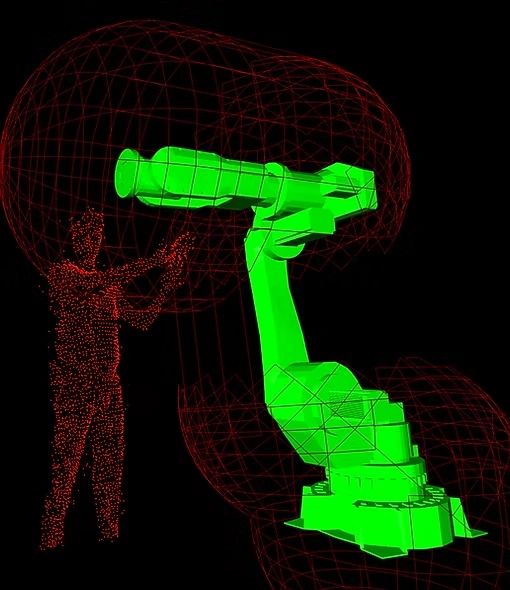
SR-1 Safety System
SR-1 is a 3D safety system built for shared-space automation. It detects people in real time and drives predictable safety behavior for industrial robots and fixed automation—without relying on fences or oversized restricted zones.
It is a safety-rated sensing and control system that uses redundant 3D sensing and software-defined zones to monitor the active workspace around robots. Designed to integrate into standard safety behaviors based on your risk assessment.
- System integrators delivering repeatable, auditable safety designs
- Robot OEMs supporting collaborative and shared-space applications
- EHS and safety engineers who need predictable behavior and clear validation scope
- Plant operations and manufacturing engineering teams focused on uptime and access
THE PROBLEM SR-1 SOLVES
Legacy safety assumes static cells and fixed access.
Modern operations do not. Frequent changeovers, mixed traffic, and shared work areas expose the limits of 2D-only approaches and hard guarding.
SR-1 supports safety designs that match how cells actually operate—people and robots working in the same space, with controlled access and consistent behavior.
HOW SR-1 WORKS
SR-1 uses redundant 3D sensing to model the active workspace and detect people in real time. You define safety zones and behaviors based on your risk assessment.
When a person enters a defined zone, SR-1 drives the required safety outputs to reduce speed or stop the robot in a predictable, repeatable way.
KEY CAPABILITIES
- Designed to PLd, Category 3 safety architecture
- Redundant 3D coverage built to handle occlusions and real-world layouts
- Software-defined zones aligned to tasks, access, and operating modes
- Predictable safety outputs for integration with standard safety controllers
- Diagnostics and event visibility
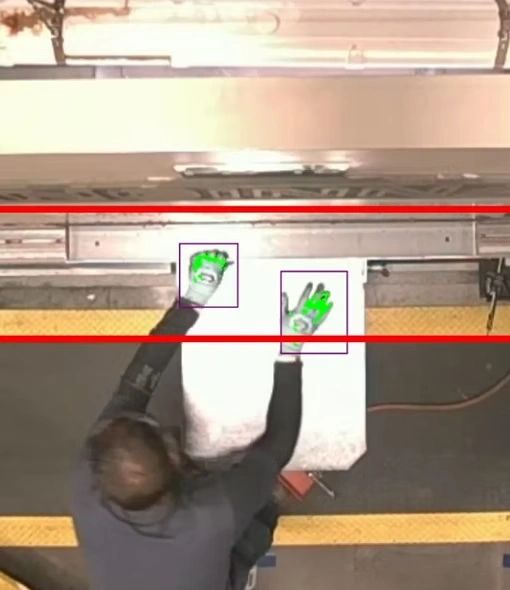
SR-Press (Hand Detection)
SR-Press is an industrial safety monitoring and control solution used with press equipment. It uses 3D sensing and an industrial computer running SR software to create a configurable safe work envelope around the operator and hazard area, and it outputs a safety stop/safe state signal to the press safety/control system when unsafe conditions are detected.
SR-Press is an industrial machine safety monitoring and control system used with industrial presses (example: press brakes).
SR-Press is not a press or forming machine; it does not perform forming work. It monitors the operator area and interfaces to the press safety circuit.
THE PROBLEM IT SOLVES
Press operations require frequent operator access near hazards for loading, unloading, setup, and adjustments. That creates a constant tension between:
- Keeping productivity and cycle time stable
- Maintaining predictable, defensible safety behavior at the operator/hazard interface
SR-Press helps you define and enforce a configurable safe work envelope and trigger a stop/safe state when an unsafe condition occurs.
HOW SR-PRESS WORKS
SR-Press uses RGB sensors and an industrial computer running Sensory Robotics software. It processes sensor data in real time to create a safe work envelope around the operator and the press hazard area.
When SR-Press detects a condition that could create risk (example: a hand entering a defined hazard zone), it outputs a safety stop / safe state command to the press control/safety system.
DEPLOYMENT FIT
SR-Press is a good fit when you want:
- A configurable safe work envelope around the operator/hazard area
- Clear stop/safe state signaling into the press safety/control system
- A workflow-friendly approach that supports setup, changeovers, and operator tasks without relying on “workarounds”
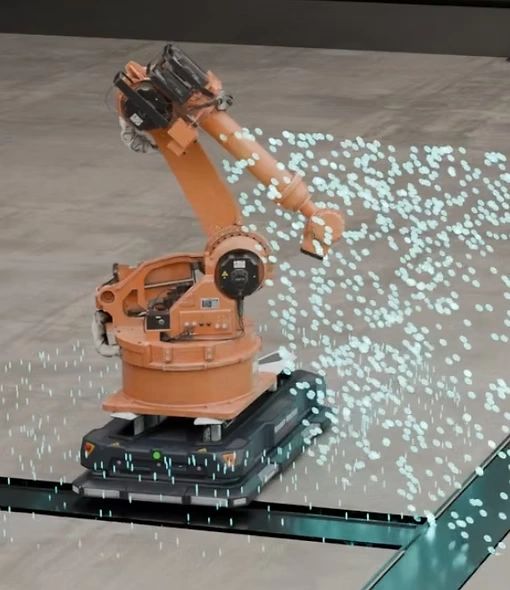
SR-Mobile
(In development) SR-Mobile applies SR-1 technology to mobile platforms so safety travels with the robot. It's built for AMRs with mounted arms, where the hazard zone moves with the system and people share the same space.
SR-Mobile is a mobile-ready safety system that brings SR-1’s 3D sensing and software-defined safety zones onto AMRs with integrated manipulators. It’s designed to detect people around the active work envelope and drive predictable safety behavior as the AMR and arm move through real operations.
SR-Mobile fits teams that need mobile manipulation without turning operations into restricted corridors:
- AMR and robot OEMs building repeatable safety into mobile platforms
- Integrators deploying AMRs with arms in active production environments
- EHS and plant leaders who need predictable behavior and validation-ready deployment discipline
THE PROBLEMS IT SOLVES
Mobile manipulators change the safety model. The risk is not tied to a fixed cell—it moves with the AMR and the arm. In real facilities, that means:
- People approach from any direction
- Aisles and staging areas change daily
- Obstructions create occlusions and unpredictable triggers
- Navigation behavior can’t substitute for safety behavior
SR-Mobile supports a consistent safety design that matches how mobile manipulation actually operates.
HOW SR-MOBILE WORKS
SR-Mobile uses 3D sensing and software-defined zones to model the active area around the AMR and mounted arm. You define safety zones and behaviors based on your risk assessment.
When someone enters a defined zone, SR-Mobile drives the required safety outputs so the system can reduce speed or stop in a predictable way.
KEY CAPABILITIES
- Safety that travels with the AMR to protect the moving work envelope
- 3D sensing for real environments with changing layouts and frequent occlusions
- Software-defined zones aligned to your operating modes and tasks
- Predictable safety outputs designed to fit standard safety architectures
- Diagnostics and event visibility to support commissioning and troubleshooting
SR-Insight
(Productivity & Risk Assessment module in development)
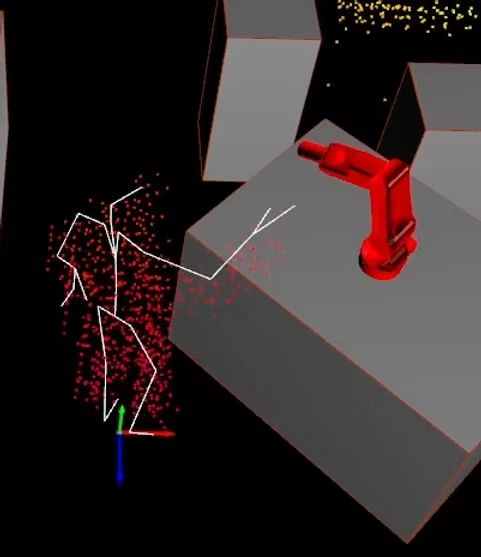
SR-Insight turns SR-1 safety data into a live control layer for your cells. It continuously compares real-time behavior against the approved risk assessment (RA), flags violations or RA drift, and surfaces dashboards of safety and productivity metrics.
SR-Insight ingests SR-1 event streams, maps events to the cell’s approved RA and thresholds, and flags out-of-policy behavior and RA invalidation risks. It delivers dashboards, alerts, and reports to operations, safety, and quality teams.
Teams can see what caused stops, slows, E-stops, human intrusions, and sensor obstructions, then drill down by time, station, and cause to fix issues fast. It also supports cross-cell benchmarking and auditor-ready logs for compliance reviews and line changes.
KEY CAPABILITIES
- Ingest SR-1 event streams from each cell
- Map events to the approved risk assessment and thresholds
- Flag out-of-policy behavior and RA drift / invalidation risks
- Dashboards, alerts, and reporting for ops, safety, and quality
- Cross-cell benchmarking to identify top performers and outliers
- Auditor-ready logs to support reviews and change control
BENEFITS
Safety and Compliance: SR-Insight continuously compares live cell behavior to the approved risk assessment, flags out-of-policy behavior and RA drift, and produces auditor-ready logs for reviews and change control.
Throughput and Quality: SR-Insight pinpoints the exact causes of stops, slows, E-stops, and intrusions, validates changeovers before ramp, and helps prevent repeat hits that erode over time.
Cost and Risk: SR-Insight cuts diagnosis time and unplanned downtime, highlights training and process fixes, and creates a pathway to lower risk and potential insurance savings. (Insurance benefits depend on carrier acceptance and customer adoption.)
Operations & IT: Scales as subscription add-on to each SR-1 system and can integrate with plant MES/BI tools via API.
HOW CUSTOMERS USE SR-INSIGHT
- Reduce nuisance stops by finding the true root cause (intrusions vs obstructions vs process issues)
- Catch “RA drift” early—before a process change turns into a compliance problem
- Standardize best practices across lines using cross-cell benchmarking
- Speed up audits and line changes using ready logs tied to approved thresholds
SR-Insight helps you keep safety and productivity aligned as cells evolve—without guessing what caused downtime or which changes pushed you out of policy.
SR-2
(In development)
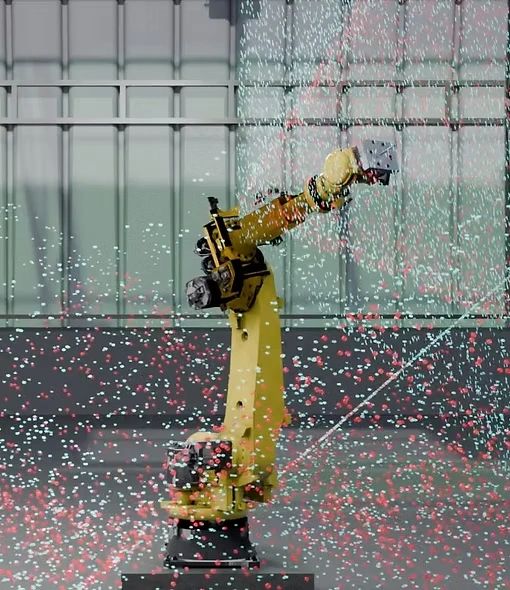
SR-2 is Sensory Robotic's next-generation direction: safety that moves with the robot. It reduces the separation between "robot" and "robot safety" by bringing sensing closer to the action.
WHAT IS SR-2
Our next-generation approach where sensors mount on the robot to provide more accurate visualization of the safety environment. SR-2 as a second-generation solution in research and development intended to reduce the need to purchase robot safety separately.
WHAT SR-2 IS TARGETING
- Robot-mounted sensing so the safety view follows the robot’s work envelope
- Embedded safety pathways that better align with OEM integration and licensing models
- Clear system boundaries so integrators and EHS teams can validate and support deployments
WHO IT'S FOR
- Robot and AMR OEMs building inherently safer platforms
- Integrators who want simpler, repeatable deployments
- End users who want safety and productivity without layered complexity
If you’re an OEM or strategic partner interested in SR-2, contact us to discuss integration goals, target applications, and what “embedded safety” needs to look like for your customers.